
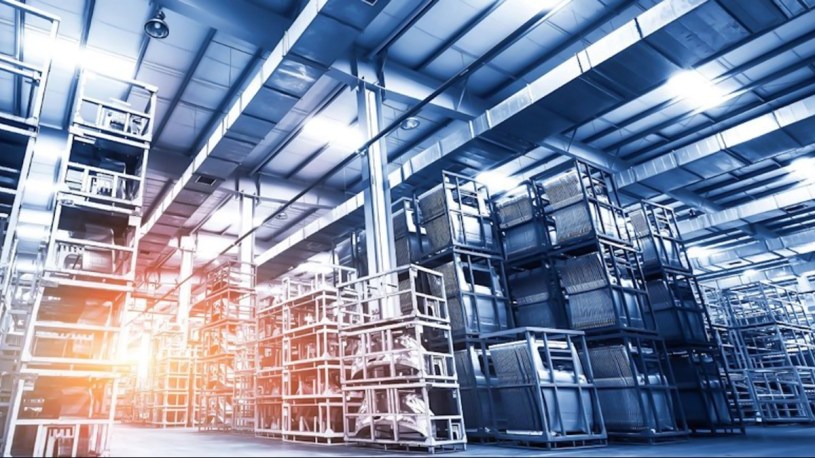
The mobile rack stands as both a testament to human ingenuity and a monument to our perpetual struggle against the tyranny of space, embodying the relentless pursuit of efficiency that defines contemporary industrial existence. In these mechanical structures that glide along rails, we witness capital’s desire to extract maximum value from every cubic metre, every moment of labour, every possibility of storage. Yet within this apparatus lies something more complex: a technology that reshapes how we conceive of space itself as a resource to be mobilised and made profitable.
The Philosophy of Moveable Architecture
Mobile racking systems represent a fundamental challenge to static storage, introducing fluid architecture within fixed industrial spaces. These systems embody a curious paradox: structures designed to be permanent yet capable of movement, solid yet flexible, orderly yet adaptable. The philosophical implications extend beyond functionality into questions of how we organise space, labour, and capital flows through physical environments.
The mechanism itself speaks to broader transformations in how contemporary capitalism approaches the problem of efficiency. Where once warehouses accepted the limitations of fixed aisles and permanent configurations, mobile storage racks introduce the possibility of space that responds to demand, that contracts and expands according to the rhythms of commerce rather than the constraints of architecture.
Technical Choreography of Space Optimisation
The operation of mobile racking involves carefully orchestrated movement between mechanical precision and human intervention. Rails embedded in warehouse floors guide these massive structures through predetermined paths, whilst safety systems ensure movement of tons of stored goods occurs without endangering workers navigating these shifting landscapes.
Key characteristics that define mobile storage systems include:
• Space compression: Elimination of multiple aisles reduces warehouse footprint by 50% or more
• Selective access: Mechanical movement creates temporary aisles for accessing specific inventory
• Load capacity: Engineered to support substantial weight whilst maintaining mobility
• Safety integration: Multiple fail-safe systems prevent movement when workers are present
• Operational flexibility: Reconfiguration capabilities adapt to changing storage requirements
This technical choreography transforms warehouses from static repositories into dynamic environments where space becomes a variable in efficiency equations. Workers no longer navigate fixed paths but engage with architecture that responds to their needs and inventory management demands.
Singapore’s Strategic Embrace of Adaptive Storage
Within Singapore’s meticulously planned industrial landscape, mobile racking technology has found particularly fertile ground for development and implementation. As one industry analyst observed, “Singapore’s mobile rack installations demonstrate how advanced economies can leverage space adaptive technologies to maintain competitive advantage despite geographical constraints.” This perspective reveals the broader geopolitical dimensions of storage technology, where national competitiveness becomes intimately connected to the efficiency of warehouse operations.
The city-state’s adoption of these systems reflects a sophisticated understanding of how spatial optimisation connects to economic strategy. In a context where land scarcity creates perpetual pressure for efficiency, mobile rack systems offer a technological solution that multiplies usable space without expanding physical footprints. This approach embodies a distinctly contemporary form of urban planning that treats industrial space as a resource to be optimised through technological intervention.
Labour Relations in Fluid Warehouses
The introduction of mobile racking fundamentally alters relationships between workers and their environment, creating warehouses where architecture participates in the labour process. Workers must adapt to shifting spaces, developing new spatial awareness and safety consciousness as they navigate environments where inventory walls move at the touch of a button.
This transformation raises profound questions about agency and control within industrial spaces. Whilst mobile systems can reduce the physical demands on workers by bringing inventory closer to picking locations, they also introduce new forms of dependency on mechanical systems and digital controls. The warehouse becomes a space where human labour must synchronise with mechanical movement, creating new rhythms and requirements for coordination.
Economic Calculations and Spatial Politics
The economics of mobile racking extend beyond simple calculations of storage density into broader questions of how capital relates to space and time. The initial investment required for these systems often represents a significant financial commitment, yet the promise of doubled storage capacity within existing facilities creates compelling arguments for adoption.
Return on investment calculations must account for reduced facility costs, improved labour efficiency, enhanced inventory management, and the strategic value of operational flexibility. Many facilities achieve payback periods within three to five years, with additional benefits accruing through improved space utilisation and reduced need for facility expansion.
Technological Integration and Future Possibilities
Contemporary mobile rack systems increasingly incorporate digital technologies that transform static storage infrastructure into responsive, intelligent environments. Sensors monitor structural integrity and loading conditions. Automated controls integrate with warehouse management systems to optimise aisle configuration based on inventory demands. Real-time tracking systems coordinate human movement with mechanical operations.
These developments point toward futures where warehouse architecture becomes increasingly responsive to operational demands, where space itself becomes programmable and adaptive. The implications extend beyond efficiency into fundamental questions about the relationship between built environments and human activity.
Resistance and Adaptation
Yet within every system of optimisation lie possibilities for resistance and alternative use. Workers develop informal practices that work around or through technological systems. Warehouse managers discover applications that exceed original design intentions. The technology designed to extract maximum efficiency from space and labour sometimes creates unexpected opportunities for human agency and creativity.
The mobile rack thus becomes more than a storage solution; it represents a particular moment in the ongoing negotiation between human needs and technological capability, between the demands of capital and the possibilities of resistance. In mastering these systems, workers and managers alike participate in shaping how technology serves human purposes rather than merely mechanical efficiency, ultimately demonstrating that even the most sophisticated mobile rack remains subject to human judgment and adaptation.
 Business Marketing Solutions